
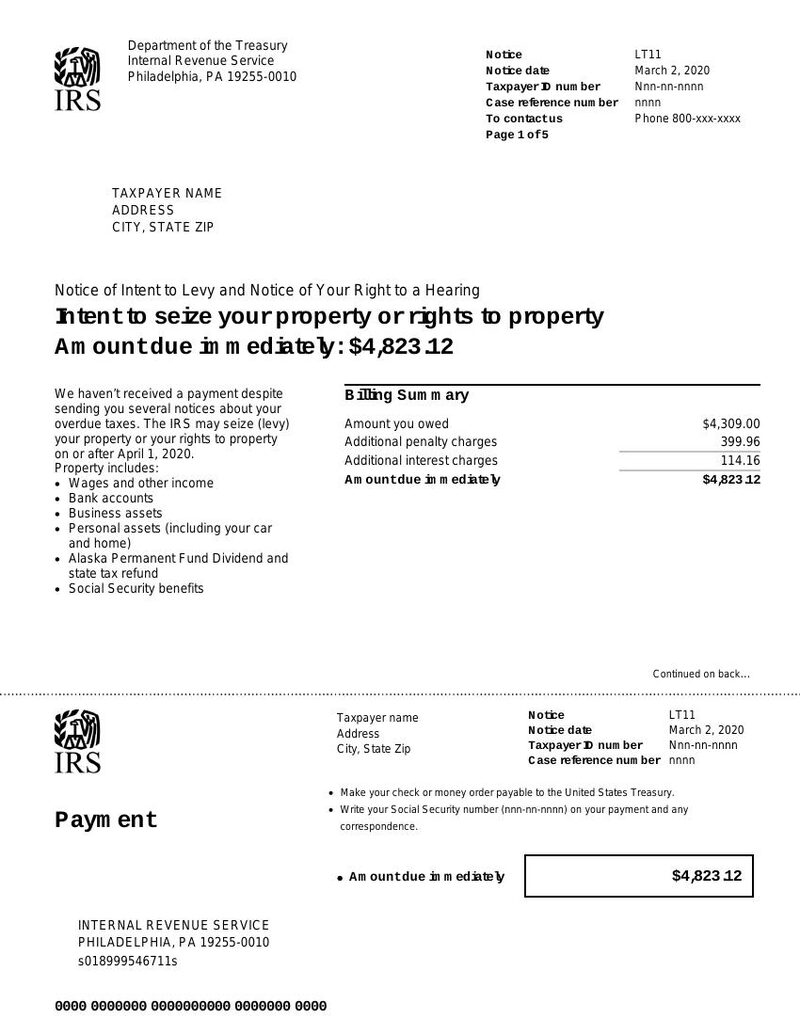
Why you got an IRS LT11 / Letter 1058
- Earlier notices (CP14 → CP501 → CP503 → CP504) went unresolved.
- A previous installment agreement defaulted (CP523) and was not reinstated.
- An Offer in Compromise or other resolution case was closed without an agreement.
What happens if you ignore this notice
Bank accounts frozen, wages garnished, property seized. This notice also gives you the right to a Collection Due Process hearing.
How to respond to a LT11 / Letter 1058
Recommended completion window: within 30 days of the notice date
- 1
Mark the 30-day CDP deadline
Calendar 30 calendar days from the notice date on the letter. This deadline is statutory — the IRS cannot extend it informally.
- 2
File Form 12153 to request a CDP hearing
Form 12153 (Request for a Collection Due Process or Equivalent Hearing) pauses levy action and routes your case to the IRS Office of Appeals. You can propose collection alternatives at the hearing.
- 3
Get into filing compliance
Unfiled returns block most resolution options. File any missing returns immediately, even if you can't pay.
- 4
Choose a collection alternative
Installment agreement (Form 9465), Currently Not Collectible status, or Offer in Compromise (Form 656). The hearing is your chance to negotiate.
- 5
Authorize a representative
A CPA, EA, or attorney with Form 2848 can attend the CDP hearing and negotiate on your behalf. Most taxpayers benefit from representation here.
Common mistakes with a LT11 / Letter 1058
- Missing the 30-day window — Equivalent Hearings exist but waive Tax Court rights.
- Filing Form 12153 with no proposed alternative — the IRS will sustain the levy if you don't propose one.
- Believing the notice is a scam — IRS levy notices are sent by certified mail and look almost identical to scam letters. Verify by calling the number on IRS.gov, not the letter.
IRS forms referenced
Form 12153
Request for a Collection Due Process or Equivalent Hearing
View form detailsForm 9465
Installment Agreement Request
View form detailsForm 433-A
Collection Information Statement (Individuals)
View form detailsForm 656
Offer in Compromise
View form detailsForm 2848
Power of Attorney and Declaration of Representative
View form details
Frequently asked questions about LT11 / Letter 1058
What's the difference between LT11 and Letter 1058?
+
Both are Final Notices of Intent to Levy with CDP rights. LT11 is issued by the IRS Automated Collection System; Letter 1058 is issued by a Revenue Officer in person or by certified mail. Your rights and the 30-day deadline are identical.
Can the IRS levy my bank account without an LT11?
+
Generally no. For most levies on bank accounts, wages, and property the IRS must first issue a final notice (LT11, Letter 1058, or CP90/CP297) and wait 30 days. State tax refunds and federal payments under the FPLP can be taken without LT11.
What happens if I miss the 30 days on an LT11?
+
You forfeit your right to a Collection Due Process hearing — the version that pauses collection and preserves Tax Court appeal. You can still request an Equivalent Hearing within one year, but it does not pause collection and the decision cannot be appealed to Tax Court.
Does filing Form 12153 stop the levy?
+
Yes — if filed within the 30-day window. The IRS suspends most levy action while Appeals reviews your case. The statute of limitations on collection is also suspended during the appeal.
Reviewed by Franklin Sofi, MBA, CPA, CTRS — Founder & Tax Resolution Specialist at Comprehensive Tax Resolution. Last reviewed November 2025.
This page is general information, not legal or tax advice. For specific guidance on your IRS notice, contact a qualified CPA or tax resolution specialist.