

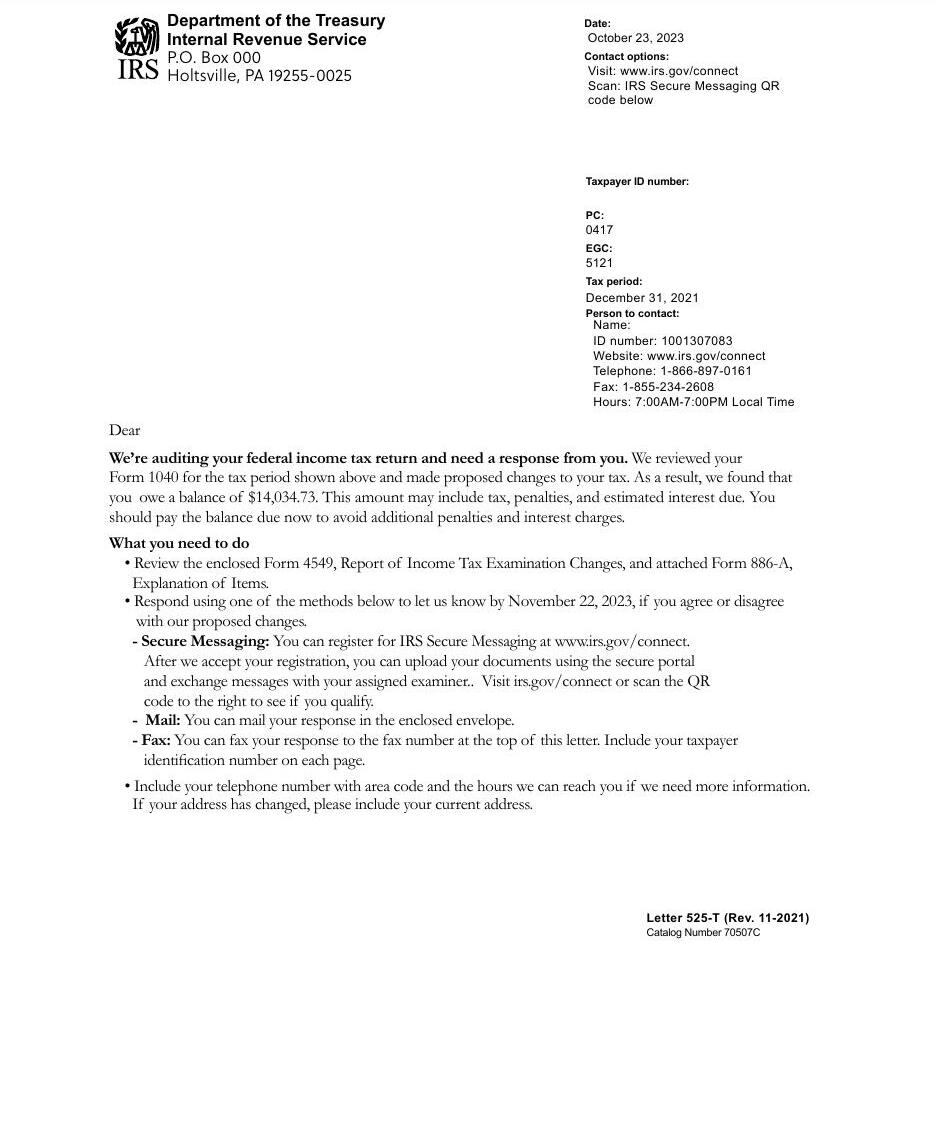
Why you got an IRS Letter 525
- You were audited (correspondence, office, or field audit) and the examiner finished the report.
- Your return was selected based on DIF score, mismatch flags, or related-party examinations.
- Schedule C deductions, large charitable contributions, or unreported income often trigger examinations.
What happens if you ignore this notice
Failure to respond or provide documentation can result in the IRS disallowing deductions and assessing additional taxes.
How to respond to a Letter 525
Recommended completion window: within Varies (typically 30 days) of the notice date
- 1
Compare the report to your records
The examiner's Form 4549 shows each adjustment. Verify each line against your documentation.
- 2
Decide: agree, appeal, or do nothing
Sign and return if you agree. If you disagree, request an Appeals conference in writing. Doing nothing triggers a Statutory Notice of Deficiency.
- 3
Request an Appeals conference
For changes over $25,000 per period, file a formal written protest. Smaller cases can use a small case request.
- 4
Bring representation
A CPA or Certified Tax Resolution Specialist with Form 2848 can speak directly with the examiner and Appeals Officer.
- 5
Preserve your Tax Court rights
If Appeals doesn't resolve it, the next step is the Statutory Notice of Deficiency. You have 90 days from that notice to petition Tax Court without first paying.
Common mistakes with a Letter 525
- Signing the agreement form without understanding the impact on future-year carryovers.
- Missing the 30-day deadline and losing the Appeals route.
- Going to Appeals without organized documentation — Appeals weighs hazards of litigation, not sympathy.
IRS forms referenced
Form 2848
Power of Attorney and Declaration of Representative
View form details
Frequently asked questions about Letter 525
Is Letter 525 the end of the audit?
+
It's the end of the examiner's work. You can still appeal to the IRS Office of Appeals, and after Appeals you can petition Tax Court if the IRS issues a Statutory Notice of Deficiency.
How long do I have to respond to Letter 525?
+
Thirty days from the date on the letter. After that, the IRS typically issues a Statutory Notice of Deficiency, and your only remaining no-pay path is Tax Court within 90 days.
Can I still go to Appeals after Letter 525?
+
Yes, if you respond within 30 days. Appeals offers an independent review separate from the examination function and resolves the majority of cases without litigation.
Reviewed by Franklin Sofi, MBA, CPA, CTRS — Founder & Tax Resolution Specialist at Comprehensive Tax Resolution. Last reviewed November 2025.
This page is general information, not legal or tax advice. For specific guidance on your IRS notice, contact a qualified CPA or tax resolution specialist.