
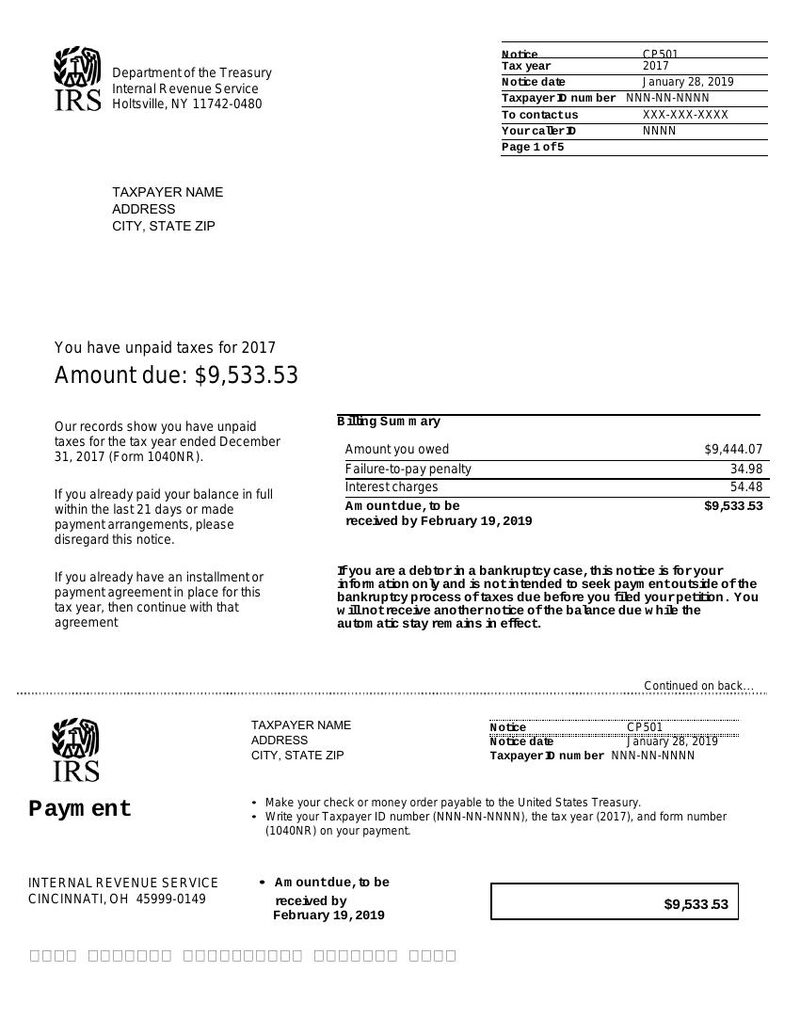
Why you got an IRS CP501
- You received a CP14 and didn't pay, dispute, or set up an arrangement.
- A previous payment plan defaulted and the balance returned to active collection.
- An IRS adjustment increased your balance after your original return was filed.
What happens if you ignore this notice
If ignored, you'll receive more serious notices and penalties will continue to accrue.
How to respond to a CP501
Recommended completion window: within 21 days of the notice date
- 1
Don't wait for the next notice
Each notice escalates collection authority. Address it before the IRS issues CP504, which threatens your state refund and other assets.
- 2
Pay or apply for an installment agreement
Most taxpayers owing under $50,000 qualify for a streamlined payment plan. Apply online or with Form 9465.
- 3
If you can't pay, request CNC or an Offer in Compromise
Currently Not Collectible status pauses collection during financial hardship. An Offer in Compromise (Form 656) settles the debt for less than owed when you qualify.
- 4
If you disagree, call the number on the notice
Have your return, payment confirmations, and any prior correspondence ready.
Common mistakes with a CP501
- Treating the CP501 as a duplicate of the CP14 and ignoring it.
- Paying online without documenting it — keep your confirmation number.
- Waiting until CP504 to act, when the IRS already has authority to seize a state refund.
IRS forms referenced
Form 9465
Installment Agreement Request
View form detailsForm 656
Offer in Compromise
View form details
Frequently asked questions about CP501
Is a CP501 the same as a CP14?
+
No. CP14 is the first bill. CP501 is the second reminder that you didn't resolve the CP14. CP503 follows next, then CP504 (intent to levy your state refund), then LT11 (final intent to levy other assets).
Does the IRS charge more for ignoring the CP501?
+
Yes. Interest compounds daily and the failure-to-pay penalty continues at 0.5% per month (up to 25% of the balance) until paid.
Can I still set up a payment plan after a CP501?
+
Yes. You can request an installment agreement at any point before the IRS terminates your account or issues a levy. Acting earlier preserves the most options.
Reviewed by Franklin Sofi, MBA, CPA, CTRS — Founder & Tax Resolution Specialist at Comprehensive Tax Resolution. Last reviewed November 2025.
This page is general information, not legal or tax advice. For specific guidance on your IRS notice, contact a qualified CPA or tax resolution specialist.